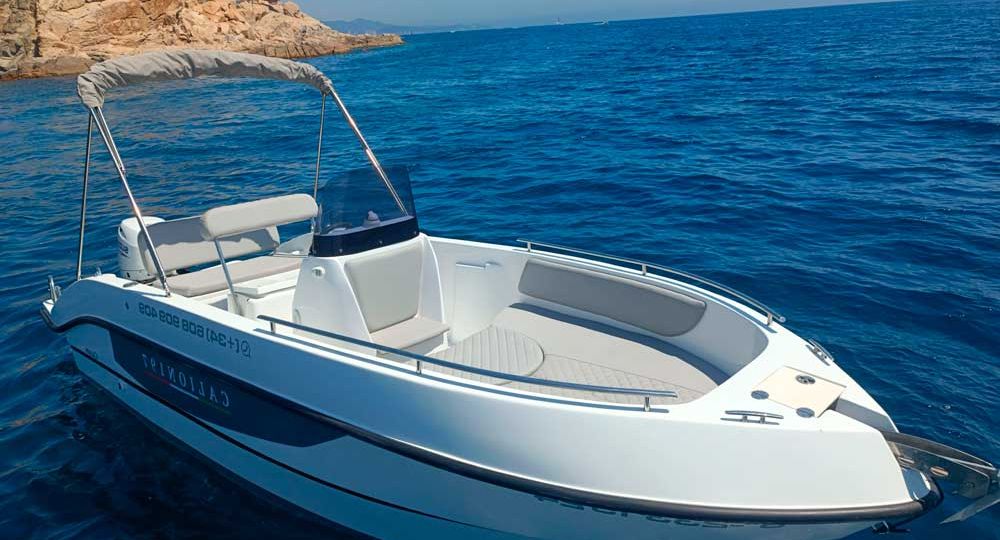

When you sail along the Costa Brava one of the first things that catches your attention is the variety of tones that the sea presents. In some points the water appears deep blue, in others it acquires intense turquoise tones and in certain coves it even becomes completely transparent.
These changes are not casual. The color of the water in the Costa Brava reveals a lot of information about the depth, the type of seabed and even the currents or the presence of underwater vegetation.
For those who sail from Palamós or explore the coastline by boat, learning to interpret these colors allows them to better understand the environment and enjoy sailing with greater knowledge of the sea.
Why does the water change color in the Mediterranean Sea?
The color of water depends mainly on three factors:
- bottom depth
- type of seabed
- incidence of sunlight
In the Mediterranean, and especially in the Costa Brava, the transparency of the water makes it possible to observe these changes very clearly.
When sunlight penetrates the water, part is absorbed and part is reflected. Depending on the depth and the material of the seabed, the color we perceive from the surface changes.
Therefore, when sailing off Palamós or along the coast towards Begur, the sea can present multiple shades in relatively short distances.
Dark blue: areas of greater depth
One of the most common colors when sailing offshore is deep blue or dark blue.
This color usually indicates:
- great depth
- no visible background
- less light reflection
In these areas the seabed can be tens of meters deep. This is why the water absorbs much of the sunlight and reflects a darker tone.
When you move away from the coast during a boat rental in Palamós, it is common to observe this deep blue characteristic of the open Mediterranean.
Turquoise: the sign of the creeks
The famous turquoise color that identifies many coves of the Costa Brava usually appears when the bottom is shallow and consists of light rock or sand.
This type of water usually indicates:
- moderate depth
- rocky or sandy bottom
- high water transparency
Many of the coves near Palamós have this tone. Places like Cala S’Alguer, Cala Castell or Cala Estreta are known for their crystal clear waters where the seabed can be seen perfectly from the surface.
This turquoise color is one of the reasons why sailing in this area is so spectacular.
Total transparency: rocky bottoms
In some parts of the Costa Brava the water can be so clear that it seems almost invisible.
This usually occurs when:
- the bottom is rocky
- no suspended sediments
- the sea is completely calm
The granite rock characteristic of the Costa Brava contributes to this transparency. Unlike areas with fine sand or mud, here the water is usually kept very clean and clear.
When sailing near cliffs or rocky coves, it is common to be able to observe fish, rocks and even underwater meadows from the boat.
Dark spots underwater: posidonia meadows
Occasionally the water has darker spots or greenish areas. This does not necessarily mean greater depth.
Often these areas correspond to posidonia meadows, a marine plant that is fundamental to the Mediterranean ecosystem.
These meadows:
- oxygenate the water
- protect biodiversity
- stabilize the seabed
They are also responsible for the extraordinary water clarity in many areas of the Costa Brava.
When observed from the surface, they usually appear as dark spots under clear water.
How water color helps during navigation
Learning to interpret the color of the water in the Costa Brava can be useful while sailing.
Experienced navigators use these visual cues to:
- identify changes in depth
- detecting rocky bottoms
- locate sandy areas
- choosing suitable places to stop or bathe
Although it is always important to consult nautical charts and navigation maps, observing the color of the water offers a first clue as to what lies beneath the surface.
The influence of the sun and the time of day
The color of the water also changes depending on sunlight.
For example:
- in the morning the sea is usually bluer
- turquoise intensifies at midday
- golden reflections appear at sunset
This is due to the angle of the light and how it reflects on the surface of the water.
That is why many people who go out by boat from Palamós especially enjoy the first hours of the day or the last hours of the afternoon, when the colors of the sea become more intense.
The geology of the Costa Brava and the color of the sea
The granitic origin of the Costa Brava also directly influences the color of the water.
The clear rocks reflect sunlight better, which favors the appearance of turquoise tones in many coves.
In addition, the combination of:
- rock
- steep slopes
- deep waters near the coast
creates spectacular contrasts between deep blue and crystal clear water.
This contrast is one of the characteristics that make sailing in this part of the Mediterranean unique.
A different way to discover the Costa Brava
Watching the sea with attention completely changes the sailing experience.
Understanding what each shade indicates allows you to better appreciate the landscape and understand how marine ecosystems function.
When you travel along the coast by boat you can discover how the colors of the sea change in a few minutes, going from deep blue to bright turquoise as you approach a hidden cove.
This diversity is one of the reasons why exploring the coast from the sea is one of the best ways to discover the coast of Palamós and the Costa Brava.
The sea never has only one color. Each shade reflects different characteristics of the seabed, depth and light.
Learning to interpret the color of the water on the Costa Brava not only enriches the sailing experience, but also allows you to better understand the natural environment surrounding Palamós.
The next time you sail along this coast, take a look at the changes in the color of the water. There is much more information hidden in them than meets the eye.