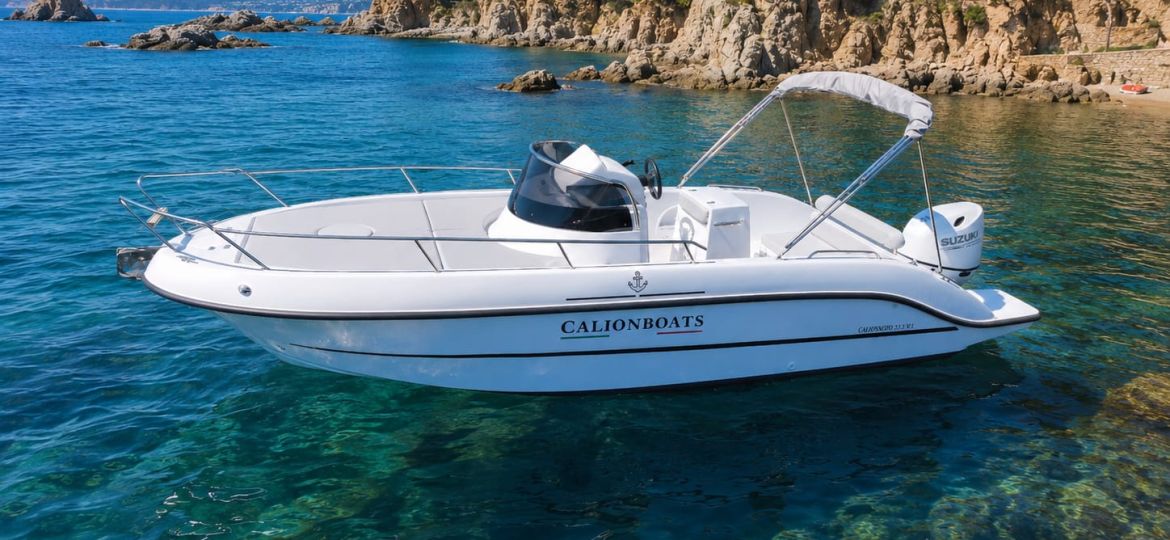

Anchoring correctly is one of the most important skills to enjoy a perfect day at sea. In Palamós, where the Costa Brava combines crystal clear coves, rocky bottoms and protected areas, knowing how and where to anchor not only enhances the experience, but also guarantees safety, respect for the environment and compliance with maritime regulations.
In this complete guide we explain how to anchor in Palamós, which areas are allowed, which ones to avoid and the most common mistakes made by first time sailors. Whether you rent a boat with a license or without a licensethis information is key to enjoy the sea with peace of mind.
What does it mean to anchor correctly
Anchoring consists of stopping the boat in the sea using the anchor to keep it fixed in a specific position. Although it may seem simple, doing it wrong can cause:
- Dangerous drifts
- Collisions with other vessels
- Hull damage
- Financial penalties
- Environmental impact on posidonia
Therefore, before dropping anchor, it is essential to know the seabed, depth and environmental conditions.
Where it is allowed to anchor in Palamós
One of the most frequently asked questions among those who opt for the boat rentals in Palamós is where they can anchor safely and legally.
Usual permitted anchorage areas
In general, anchoring on sandy bottoms is permitted, provided that there are no specific restrictions and the safe distance from the coast and other vessels is respected.
Some common and safe areas are:
- Margarida Cove
- La Fosca (outdoor areas)
- Castell Beach
- Cala S’Alguer (with special caution)
- Cala Estreta (sandy areas)
These coves are very popular with recreational boats because they offer natural protection and suitable bottoms for anchoring.
Areas where anchoring is NOT allowed
On the Costa Brava there are protected areas where anchoring is totally prohibited, especially on Posidonia oceanica, a marine plant protected by law.
Anchoring is prohibited:
- On posidonia meadows
- In areas marked with specific buoys
- In channels of entry and exit of vessels
- Too close to the coast or beaches
- In areas marked as protected
Anchoring on posidonia can lead to significant penalties and irreversible damage to the ecosystem. Therefore, it is essential to observe the color of the bottom:
- Sand → light and uniform background
- Posidonia → irregular dark spots
How to anchor correctly step by step
For many users who rent a boat without previous experience, this is the most important point.
Step 1: choose the right stitch
Look for an area with:
- Sand bottom
- Adequate depth (neither too shallow nor too deep)
- Sufficient space in relation to other ships
Step 2: Calculate the depth
As a general rule, you should release between 3 and 5 times the depth in line.
Example:
If there are 4 meters of depth → minimum 12-20 meters of line.
Step 3: Setting the anchor correctly
- Stop the engine
- Toss the anchor gently (do not pull it).
- Slowly loosen the rope
- Backs up slightly to check that the anchor grips
Step 4: check that the boat is fixed
Observe landmarks on land for a few minutes.
If the boat moves, the anchor has not grabbed properly and you should repeat the process.
Common errors when anchoring in Palamós
Many of the problems that occur in summer have their origin in basic anchoring errors.
Most common errors
- Not releasing enough line
- Anchoring too close to other vessels
- Do not check if the anchor has grabbed
- Anchoring on posidonia due to lack of knowledge
- Failure to take into account wind shift
In Palamós, the wind can change throughout the day, especially in the afternoon. A correct anchorage should anticipate this possible change.
Anchoring and unlicensed boats
If you are sailing an unlicensed boat, anchoring requires even more attention, as these boats tend to be lighter and more sensitive to the wind.
Specific recommendations:
- Avoid excessive depths
- Anchoring only in protected coves
- Do not go too far from the port
- Maintain visual surveillance at all times
In Rent Boats Costa Brava we explain the anchoring step by step before setting sail, precisely so that users can enjoy without risks.
Safety distance and coexistence at anchorage
Anchoring is not only a technical issue, it is also a matter of respect.
You must:
- Maintain sufficient distance from other vessels
- Avoid crossing lines
- Do not anchor in front of the bow of another vessel.
- Respect the turning space of each vessel.
Remember that each boat turns according to the wind and current. Anchoring too close can cause collisions.
What to do if the anchor does not work
If you notice that:
- The ship drifts
- Anchor does not grip
- Wind changes
- You feel insecure
The best is:
- Raise anchor
- Search for another area
- Try again calmly
Not forcing an incorrect anchorage avoids major problems.
Responsible anchoring and respect for the environment
One of the key values when sailing along the Costa Brava is respect for the marine environment. Responsible anchoring protects:
- Posidonia
- Marine fauna
- Water quality
- The natural landscape
Every user who anchors correctly contributes to preserve Palamós as we know it.
Final tips to enjoy anchoring in Palamós
- Arrive soon to the most popular coves
- Always observe the background
- Check weather conditions
- Ask before leaving if you have any doubts
- Don’t be in a hurry
A good anchorage turns a boat trip into an unforgettable experience.
Knowing how to anchor in Palamós makes the difference between a perfect day and a complicated experience. Choosing the right spot, respecting the regulations, taking care of the environment and acting with common sense will allow you to enjoy the sea with total peace of mind.
At Rent Boats Costa Brava we not only rent boats: we accompany you to sail safely, confidently and respectfully along the Costa Brava.
If you have any doubts before leaving or need advice, our team will be happy to help you.