
Planning a day trip by boat along the Costa Brava involves deciding which places to visit, which boat to choose, and how much time to spend sailing. However, there is another factor to consider before setting out to sea: fuel consumption.
Unlike with a car, calculating a boat’s fuel consumption depends on numerous factors. Engine power, speed, onboard weight, and conditions in the Mediterranean can significantly affect fuel consumption even within a single day.
If you’re thinking about renting a boat in Palamós, understanding how a boat’s fuel consumption works will help you better manage your budget and enjoy a more efficient sailing experience.
1. What factors affect a boat’s fuel consumption?
There’s no single figure that can determine exactly how much fuel a boat consumes. Even two boats of the same model can have different fuel consumption rates depending on how they’re used.
The main factors that influence fuel consumption are:
- Engine power and specifications.
- Cruising speed.
- The weight of the boat and its occupants.
- Wind and sea conditions.
- Distance traveled.
- Engine operating hours.
- The way the boat is operated.
For this reason, before choosing among the different rental boats on the Costa Brava, it’s a good idea to consider what kind of trip you want to take and what your actual needs are.
A day spent visiting nearby coves may require much less fuel than a longer trip along the coast.
2. How is a boat’s fuel consumption measured?
While it’s common to express fuel consumption for land vehicles in liters per 100 kilometers, in the boating industry, consumption is frequently measured in liters per hour.
This unit provides an estimate of how much fuel an engine consumes during a given period of operation.
For example, if a boat has an average fuel consumption of 15 liters per hour and is underway for two hours, the estimated fuel consumption will be 30 liters.
The following table shows some theoretical examples:
| Average fuel consumption | 1 hour of sailing | 2 hours of browsing | 3 hours of sailing |
|---|---|---|---|
| 10 liters/hour | 10 liters | 20 liters | 30 liters |
| 15 liters per hour | 15 liters | 30 liters | 45 liters |
| 20 liters per hour | 20 liters | 40 liters | 60 liters |
| 25 liters per hour | 25 liters | 50 liters | 75 liters |
| 30 liters per hour | 30 liters | 60 liters | 90 liters |
These figures are illustrative examples and do not reflect the actual fuel consumption of the vessels in our fleet. Actual fuel consumption will depend on the engine, the speed, and the conditions of each trip.
It’s also important to distinguish between rental hours and actual engine operating hours. During an eight-hour day, it’s common to spend part of that time swimming, resting, or enjoying a cove with the engine turned off.
3. How does speed affect fuel consumption?
One of the most common mistakes when boating is thinking that increasing speed saves fuel because it takes less time to reach your destination.
However, a marine engine’s fuel consumption does not necessarily increase in direct proportion to speed. Sailing at high speeds can significantly increase fuel consumption.
Each boat has its own specific characteristics and an operating range within which it can offer a good balance between speed, fuel consumption, and comfort.
Maintaining an appropriate cruising speed, avoiding sudden accelerations, and adapting your driving to sea conditions are some of the best ways to optimize fuel consumption.
In addition, cruising at a leisurely pace allows you to better enjoy the scenery, especially in a setting like the Costa Brava, where cliffs, small coves, and pine forests are part of the appeal of the experience.
4. Does a larger boat consume more fuel?
A boat’s dimensions affect its weight, hydrodynamic drag, and power requirements. However, a larger boat does not always mean proportionally higher fuel consumption.
Hull design, engine efficiency, and weight distribution also play an important role.
At Rent Boats Costa Brava, we offer a variety of boats suited for different types of outings:
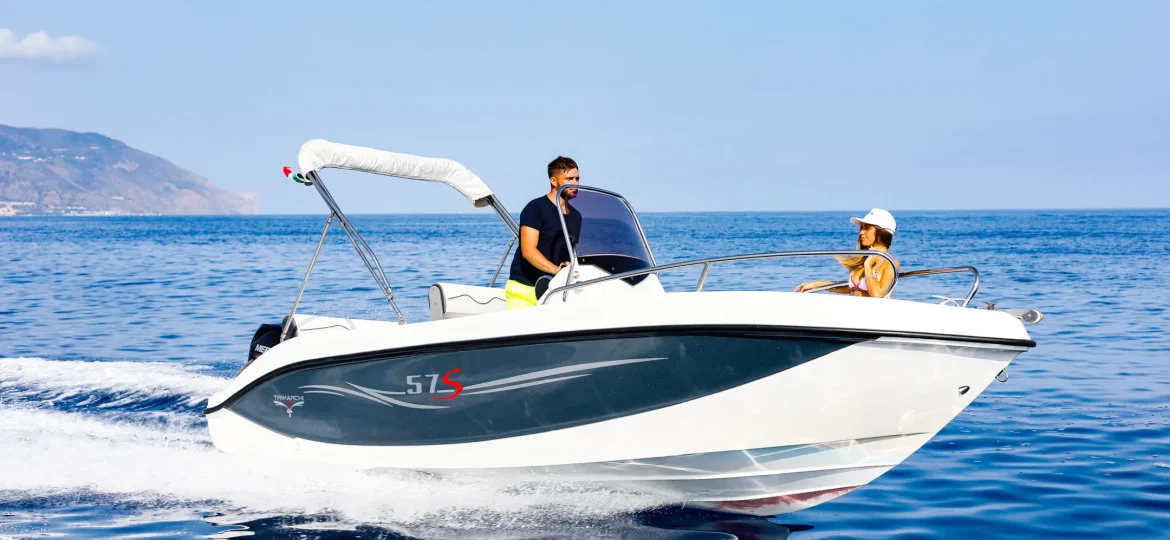
- Trimarchi 57s: a great option for enjoying coastal cruises and days out on the water.
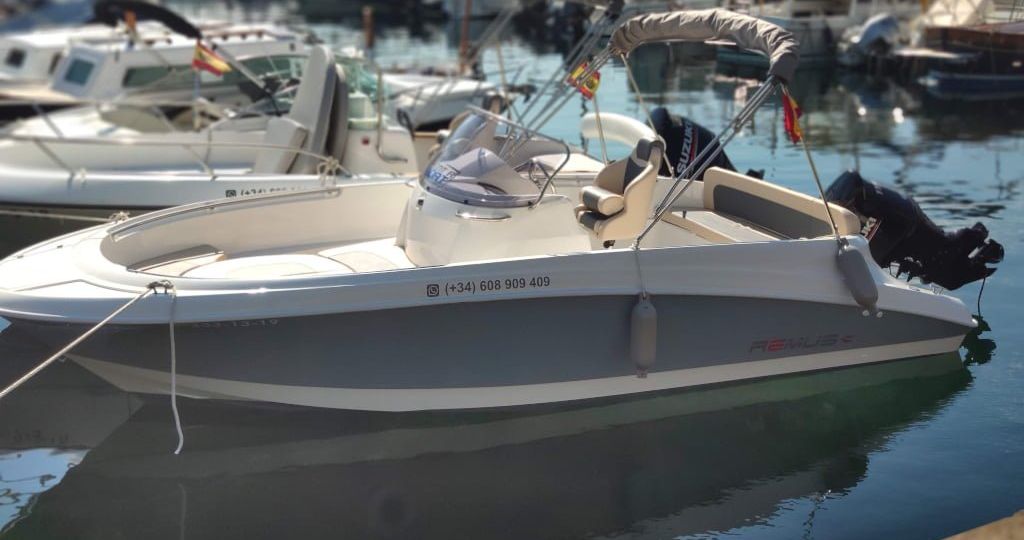
- Remus 620: a boat that lets you combine sailing with moments of relaxation on board.
- Calion 730: a larger option for those seeking more space during their time at sea.
The choice should be made based on the number of passengers, the available boating certifications, the planned route, and each group’s preferences.
Choosing a boat that suits your needs is the first step toward an enjoyable and efficient sailing experience.
5. Which routes allow you to optimize fuel efficiency when departing from Palamós?
One of the great advantages of departing from Port Marina de Palamós is its proximity to numerous points of interest along the Girona coastline.
You don’t have to make long voyages to find places of great natural beauty.
Sailing northward
The northern route from Palamós takes you through some of the Costa Brava’s most iconic landscapes, such as Cala S’Alguer, Castell, Cala Estreta, and the area around Calella de Palafrugell.
Planning a route with stops relatively close to one another allows you to combine short sailing trips with breaks for rest and swimming.
Sailing South
The southern route from Palamós offers the chance to explore the coastline of Sant Antoni de Calonge, Torre Valentina, Platja d’Aro, and S’Agaró.
If conditions are favorable and the boat allows it, you can plan a trip tailored to your preferences without having to keep the engine running continuously.
In either case, it’s essential to stay within authorized navigation zones and ensure you have enough fuel for the return trip.
6. Wind and waves also affect fuel consumption
Weather conditions have a direct impact on a boat’s performance.
Sailing into the wind or through rough seas can put more strain on the engine and increase the amount of fuel needed to cover the same distance.
On the Costa Brava, the Tramontana and the Garbí are two winds you should be familiar with before planning a trip.
In our article on the impact of the Tramontana and the Garbí on sailing along the Costa Brava, we explain how these phenomena can affect sea conditions.
It’s also a good idea to check AEMET’s marine weather forecast before leaving the harbor.
Adjusting your route to weather conditions not only helps optimize fuel efficiency but also contributes to the safety and comfort of all passengers.
7. Tips for Reducing Fuel Consumption During Your Rental
Small changes in the way you drive can make a big difference in fuel consumption.
Here are some recommendations you can follow on your next trip:
- Maintain a cruising speed appropriate for the boat.
- Avoid sudden acceleration and abrupt changes in speed.
- Distribute the weight of passengers and luggage properly.
- Plan your route before leaving the harbor.
- Avoid unnecessary trips between coves.
- Turn off the engine when you are safely anchored.
- Adjust your navigation to the wind and waves.
- Follow the rental company’s recommendations.
Remember that saving fuel should never take precedence over safety. It’s essential to have enough fuel on hand to handle possible weather changes, unforeseen events, or route changes.
8. How much money should you set aside for fuel?
To calculate the approximate cost of fuel for a day of sailing, you can use a simple formula:
Estimated cost = liters consumed × price per liter.
For example, if you consume 40 liters during a trip and the price of fuel is 1.80 euros per liter, the cost would be 72 euros.
This is just an example for reference, as fuel prices may vary depending on the season and the fueling location.
Before making a reservation, it’s a good idea to review the rental terms and conditions and check how fuel is handled.
If you’d like to learn more about the costs involved in a day at sea, check out our guide on how much it costs to rent a boat in Palamós.
Enjoy the Costa Brava with efficient sailing
Good planning allows you to enjoy a day on the Mediterranean without making unnecessary trips or constantly worrying about fuel consumption.
Palamós’s prime location, surrounded by coves, beaches, and natural landscapes, makes it easy to plan trips tailored to different types of boats and sailing experiences.
At Rent Boats Costa Brava, we’ll help you choose the best boat for your next outing. Check out our fleet of rental boats in Palamós and start planning an unforgettable day exploring the Mediterranean at your own pace.